Mold Testing For Curious Homeowners

It is astonishing how quickly mold can spread in properties with unnoticed leaks. Within weeks, mold spore counts may skyrocket by over tenfold. This rapid proliferation highlights the important importance of Mold Testing & Inspection in Los Angeles for all property owners and tenants.

Professional Mold Inspection In Los Angeles
This journey of Fungal Inspection in LA began with the founders witnessing the devastating effects of hidden mold on families. They aimed to prevent serious health risks by identifying mold early. Their commitment is to deliver clear, science-backed answers through detailed mold testing & inspection in Los Angeles.

This firm serves the Greater Los Angeles metro area, focusing on home and business fungal assessment. Professionals offer evaluation-only solutions to maintain impartiality. With over 20 years of experience and thousands of investigations, their expertise includes identifying dampness sources, considering HVAC and airflow, and using non-invasive testing methods.

This article will detail the role of a Los Angeles mold inspector, the significance of scheduled testing, what to expect during a expert assessment, and the necessary actions if elevated spore counts or contamination are detected.

How Routine Fungal Assessment Matters For Los Angeles Homes

Mold Testing For Curious HomeownersMold Testing For Curious Homeowners

Regular assessments are essential for catching small problems before they escalate. Across Los Angeles, damp areas behind walls or under flooring can harbor hidden mold colonies. Those colonies release spores into living spaces. Regular IAQ assessment provides property owners with the data needed to address early signs of contamination.

Exposure to mold may lead to a variety of symptoms. Individuals may experience a stuffy nose, throat irritation, coughing, wheezing, eye soreness, or skin rashes. Those with mold allergies often react severely to even low spore counts. Sensitive individuals and those with chronic lung disease are at a higher risk of serious infections from certain fungal species.

LA’ microclimates significantly influence dampness levels inside homes. Coastal fog, seasonal rains, and localized humidity, combined with past water intrusion, build ideal conditions for mold growth. Mold thrives on spores, a food source such as drywall or wood, and dampness. Hidden leaks, flooded carpets, or high indoor humidity deliver the necessary conditions for expansion.

Black mold detection is critical when occupants report persistent symptoms without visible staining. Assessment can pinpoint elevated fungal counts and specific species that pose greater health concerns. Focused toxic mold screening is necessary for shaping remediation plans and clearance testing after cleanup.

Routine evaluation is vital after any water event. Flooding, burst pipes, and undetected roof leaks can seed unseen pockets of mold. A scheduled campaign of fungal testing & inspection in Los Angeles uncovers moisture hotspots and early expansion before structural damage occurs.

Protecting vulnerable people in the home requires proactive measures. Routine indoor air quality testing in Los Angeles helps clinicians and service providers link symptoms to indoor exposures. Assessment informs decisions about remediation, containment, and whether replacement of porous materials is necessary.

Agencies such as the CDC and EPA emphasize the importance of moisture control and timely cleanup for small mold problems. For large or concealed contamination, professional assessment is recommended. Working with certified inspectors ensures assessment is performed using recognized protocols and that outcomes guide safe, practical interventions.

Purpose for Testing How Testing Helps When to Book
Unexplained health symptoms Pinpoints elevated spore counts and likely species Updated repeated respiratory issues or new onset allergies
Updated water intrusion Locates concealed expansion behind finishes and under floors Following floods, leaks, or lasting dampness
High indoor humidity Locates dampness sources and advises dehumidification During humid seasons or in coastal local areas
Protecting vulnerable residents Guides remediation and clearance assessment for safety Before returning sensitive individuals to the space

Common Signs Of Mold And When To Call A Los Angeles Mold Inspector

Noticeable mold often gives the first clue that a property needs attention. Look for dark stains on walls and ceilings, peeling paint, blistered drywall, warped flooring, and spots of fuzzy expansion. Persistent musty odors can point to active growth even when stains are not obvious.

Hidden mold shows itself in subtler ways. Occupants who develop recurring sneezing, coughing, wheezing, or sinus irritation without other causes should suspect indoor fungal impact. A steady musty smell after cleaning, a history of flooding, roof leaks, or repeated plumbing failures signal areas where mold often hides behind finishes, inside wall cavities, attics, and crawl spaces.

Noticeable indicators

Discoloration, circular or irregular stains, and peeling paint often mark past or current moisture intrusion. Warped baseboards and bubbling paint can mean lasting dampness. Airborne spores may create faint black or green specks on surfaces that are easy to miss at first glance.

Hidden indicators

Condensation on windows, unexplained odors from HVAC vents, and damp insulation are common signs that mold may be concealed. If sensitive household members show symptoms that ease away from the property, hidden colonization should be considered. Past flood events raise the likelihood of deeply embedded contamination.

If to call a expert

Property owners should arrange home mold assessment when visible mold covers roughly 10 square feet or more, after significant water intrusion, or when occupants with allergies, asthma, or weakened immune systems become symptomatic. Buyers and sellers also Advantage from a expert mold evaluation before real estate transactions to document conditions objectively.

How hire a certified specialist instead of relying on DIY checks

Certified inspectors bring formal credentials and field-tested protocols. They use calibrated moisture meters, FLIR thermal imaging, and standardized sample collection to pinpoint moisture sources and collect representative test samples for lab analysis. Those seeking dependable toxic mold screening, unbiased findings, and clear next steps should choose an independent inspection-only firm to avoid conflicts of interest with remediation providers.

Updated or Situation Which it Suggests Updated Action
Noticeable dark stains or fuzzy growth Updated surface colonization Document area, arrange home mold assessment, isolate affected space
Updated paint, warped flooring Ongoing moisture intrusion Inspect roof, plumbing, and HVAC; schedule expert mold evaluation
Musty odor without visible mold Concealed mold in wall cavities or ductwork Engage a Los Angeles mold inspector for focused sample collection and thermal scan
Recurring respiratory symptoms in people inside the property Possible indoor air quality issue Pursue air sampling and black mold detection through certified assessment
Post-flooding or major leaks High risk of extensive contamination Fast expert mold evaluation and documented clearance assessment

Mold Testing & Inspection In Los Angeles

A detailed inspection commences with a meticulous walkthrough of the building. The Los Angeles mold inspector meticulously documents any visible mold, stains, warped materials, and possible water intrusion paths. Special attention is given to attics, crawl spaces, basements, HVAC plenums, and appliance areas to uncover concealed dampness sources.

Which A Expert Evaluation Includes

Inspectors conduct a thorough non-invasive visual survey, documenting building materials, maintenance issues, as well as occupant complaints. Dampness assessment employs pin and non-contact moisture meters, along with relative humidity readings, to identify wet areas. FLIR thermal imaging is used to detect concealed temperature and moisture anomalies, guiding the selection of test samples for further review.

Indoor Air Quality Testing And Air Sample Collection

Indoor air quality testing involves comparing indoor and outdoor spore counts to detect elevated fungal impact levels. Air sampling captures airborne fungal particles and particulates for laboratory identification. Laboratory summaries detail the fungal genera and approximate concentrations for each sample, aiding in determining contamination levels and the scope of remediation required.

Sample Collection Strategies: Types And Placement

One tailored sampling strategy is developed based on the property’s specific evaluation. Typically, homes require two to three initial samples. Typical test sample types include air test samples, surface swabs, and tape lifts. Test Sample locations are determined by dampness readings, thermal anomalies, visible growth, occupant symptoms, and past water events.

Each sample adheres to a chain-of-custody protocol and is analyzed by a certified laboratory. Calibrated sampling instruments and documented protocols ensure the integrity of the results. Inspectors may expand sampling if preliminary results indicate unexpected elevations.

Specialty Protocols For Sensitive Customers

Clients with mold-related illnesses, such as chronic inflammatory response syndrome, receive specialized protocols. This credentialed mold expert employs measures to minimize cross-contamination, increases sample collection density, and follows strict contamination-avoidance steps. Coordination with medical practitioners is essential when test planning necessitates a clinical context.

Inspection Component Purpose Typical Equipment
Updated Survey Document noticeable mold, stains, and water intrusion Flashlight, camera, evaluation mirror
Moisture Assessment Locate elevated dampness that helps mold growth Pin meter, non‑contact meter, hygrometer
Updated Imaging Reveal concealed moisture and guide sample collection FLIR thermal camera
Air Sample Collection Measure airborne spore counts as well as compare indoors vs outdoors Updated trap samplers, calibrated pumps
Surface Sample Collection Verify presence and type of fungal growth Updated, tape lifts, sterile collection kits
Updated Protocols Protect sensitive people inside the property and ensure reliable results PPE, contamination control, expanded sample collection plan

An evaluation-only approach ensures impartiality. Many Los Angeles firms refrain from remediation work to maintain objectivity. Customers receive detailed documentation, lab reports, and recommendations to guide careful next steps.

Selecting A Credentialed Mold Inspector And What Certification Means

Identifying a proficient expert hinges on their credentials, training, and methodologies. One credentialed mold expert possesses documented education in sampling protocols, indoor air quality testing, and fungal identification interpretation. Property owners must confirm active certifications, ongoing education, and professional organization memberships before engaging a mold assessment service.

Certifications And Qualifications To Look For

Seek credentials such as MICRO, MIS, or CMI levels from reputable industry bodies and documented coursework in laboratory sampling and summary interpretation. Ensure the inspector has hands-on experience with air and surface sampling, as well as familiarity with local building materials and climate impacts in Los Angeles. Documentation of ongoing training is necessary, indicating the inspector’s commitment to staying updated with best practices.

How Inspection-Only Firms Reduce Conflicts Of Interest

Independent firms, which do not offer remediation services, avoid the conflict of interest that can lead to unnecessary work recommendations. An unbiased Los Angeles mold inspector provides objective findings and helps clients interpret results without promoting mold remediation providers. That independence safeguards homeowners, tenants, and property managers from financial and liability risks associated with mixed-support providers.

Equipment, Methods, And Quality Control

Trusted inspectors employ FLIR thermal imaging to detect concealed dampness, moisture meters and hygrometers for precise readings, and calibrated air pumps with spore traps for air sampling. Surface sample collection tools, such as tape lifts and swabs, must be accompanied by chain-of-custody paperwork and certified laboratory review. Regular calibration and maintenance of tools are critical to ensure sample integrity and reliable outcomes during any expert mold evaluation.

Evaluating Public Trust And Summaries

Review local feedback for insights into the inspector’s thoroughness, communication, and report clarity. One skilled Los Angeles mold inspector should explain the rationale behind specific test sample locations and outline next steps if elevated fungal particles are detected. If referrals are necessary, the inspector should suggest qualified mold removal services while maintaining an independent stance.

Costs, Summaries, And Next Steps After Assessment

The evaluation summary serves as a guide for homeowners to plan their next steps. Pricing for non-invasive home inspections, covering areas up to 1,500 sq ft, starts around $350. These inspections typically include moisture readings, humidity checks, and thermal imaging.

Lab review for test samples expenses approximately $100 per test sample. Typical packages include evaluation and sample bundles: two samples for about $550 or three for roughly $650. Larger homes and more complex moisture issues may necessitate additional test samples, increasing the overall cost.

How test sample counts are chosen

The sample collection strategy is determined during the on-site evaluation. Inspectors choose test sample types and locations based on noticeable damage, moisture mapping, and health concerns. For many sensitive patients, additional samples may be recommended to ensure thorough documentation.

Which appears in the summary

Summaries detail findings, include moisture maps, thermal images, and lab fungal identification. Lab outcomes outline detected species and compare indoor to outdoor spore concentrations. This reports explain the significance of species like Stachybotrys and deliver recommendations for containment and remediation.

Updated for remediation

Remediation expenses vary based on contamination extent and repair needs. Local remediation jobs can start at around $2,000 for minor work. Trusted service providers offer detailed proposals, enabling homeowners to compare solutions and prices.

Selecting the right path after detection

Upon confirming mold presence, inspection-only firms often refer property owners to trusted mold remediation providers. It’s essential to vet service providers for their containment methods, certifications, and written estimates before starting work.

Updated after work is done

After-cleanup clearance testing confirms that removal and containment standards were met. This process includes visual verification and focused sample collection to ensure air quality has been restored to acceptable levels.

Updated checklist

  • Check the evaluation summary and ask the inspector for clarification on sample results.
  • Get at least two bids from qualified mold remediation providers that include detailed scope and costing.
  • Book after-cleanup clearance testing after work finishes to verify successful outcomes.

Preventing Future Mold Growth And Improving Indoor Air Quality

In order to prevent mold recurrence, it is essential to manage dampness levels and maintain a routine cleaning routine. Simple yet effective measures, such as timely inspections and focused cleaning, significantly reduce the risk of mold growth. These practices are important, given the higher susceptibility of older Los Angeles homes and properties with high humidity.

Moisture Control Plans

Fast repair of water intrusions in roofs, windows, and plumbing is vital to prevent water from fostering mold growth. Utilizing exhaust fans in areas like showers, kitchens, and laundry rooms helps to expel humid air. Dehumidifiers can be employed to maintain a relative humidity below 50 percent in damp areas such as basements and garages.

Following a flood, it is imperative to dry materials swiftly and adhere to tested recovery protocols. Within cases of severe water intrusion, drying structural cavities and removing wet, porous items is necessary to prevent hidden mold growth that may require professional mold remediation providers.

Maintenance Attics Crawl Spaces HVAC

Ensuring proper ventilation, insulation, and debris-free conditions in attics and crawl spaces is critical. Seasonal inspections of roof penetrations and vents are necessary to prevent dampness intrusion. Sealing gaps around plumbing runs effectively blocks humid air from entering living spaces.

Maintaining HVAC systems is equally vital to minimize airborne fungal particles. Regular support for coils and condensate pans, timely filter changes, and ductwork inspections for signs of dampness or staining are essential. Practical maintenance in attics, crawl spaces, and HVAC systems collectively reduces mold risk and strengthens comfort.

Cleaning Versus Replacement And Careful DIY Precautions

For minor, nonporous mold patches, cleaning with detergent or CDC-approved solutions is sufficient. Within contrast, porous materials like ceiling tiles, carpet, insulation, and certain drywall may necessitate removal when mold is detected.

DIY mold remediation requires protective gear, including an N95 respirator, nitrile or neoprene gloves, and non-vented goggles. Bleach should be used judiciously on suitable surfaces only, following CDC guidelines. Large-scale mold infestations, on the other hand, demand professional mold removal services.

Ongoing Monitoring And Indoor Air Quality Testing

Routine inspections are key to identifying issues early. Post-remediation, indoor air quality testing confirms the return to normal spore levels. High-risk properties Advantage from regular testing to ensure lasting control and the efficacy of preventive measures.

Problem Step Who to Call
Roof or plumbing leak Updated immediately; dry affected areas within 48 hours Licensed roofer or plumber, credentialed inspector
Updated above 50% Install or run dehumidifier; improve ventilation HVAC technician or environmental specialist
Minor surface mold <10 sq ft Clean hard surfaces using detergent or recommended solution Homeowner using PPE or cleaning contractor
Porous materials with mold Remove and replace affected materials Mold removal services and waste waste handling crew
Post-flood assessment Dry structural cavities; remove wet contents; test as needed IAQ assessment company and remediation professionals

Summary

Routine, professional fungal testing & inspection in Los Angeles safeguards both health and building. It detects concealed dampness and mold before problems worsen. A licensed Los Angeles mold inspector employs equipment like FLIR thermal cameras, dampness meters, and calibrated sample collection. That delivers objective outcomes, providing property owners with clear metrics and practical next steps.

Home mold testing, combined with a detailed visual evaluation and focused sampling, minimizes uncertainty. If assessment reveals elevated spore counts or contamination, following remediation recommendations and obtaining after-cleanup clearance testing restores confidence in indoor air quality. Regular maintenance, fixing water intrusions, improving ventilation, and monitoring humidity, limits future expansion.

For Los Angeles residents concerned about hidden mold, engaging a credentialed inspector offers clarity and peace of mind. Mold Inspection in LA was founded to prevent health impacts from unnoticed mold and to pinpoint issues early. After testing, act on the summary, complete recommended cleanup, and maintain dampness-control practices to ensure a safer home.

CNC Machine Shop Dallas – Family-Owned with a Focus on Personal Service

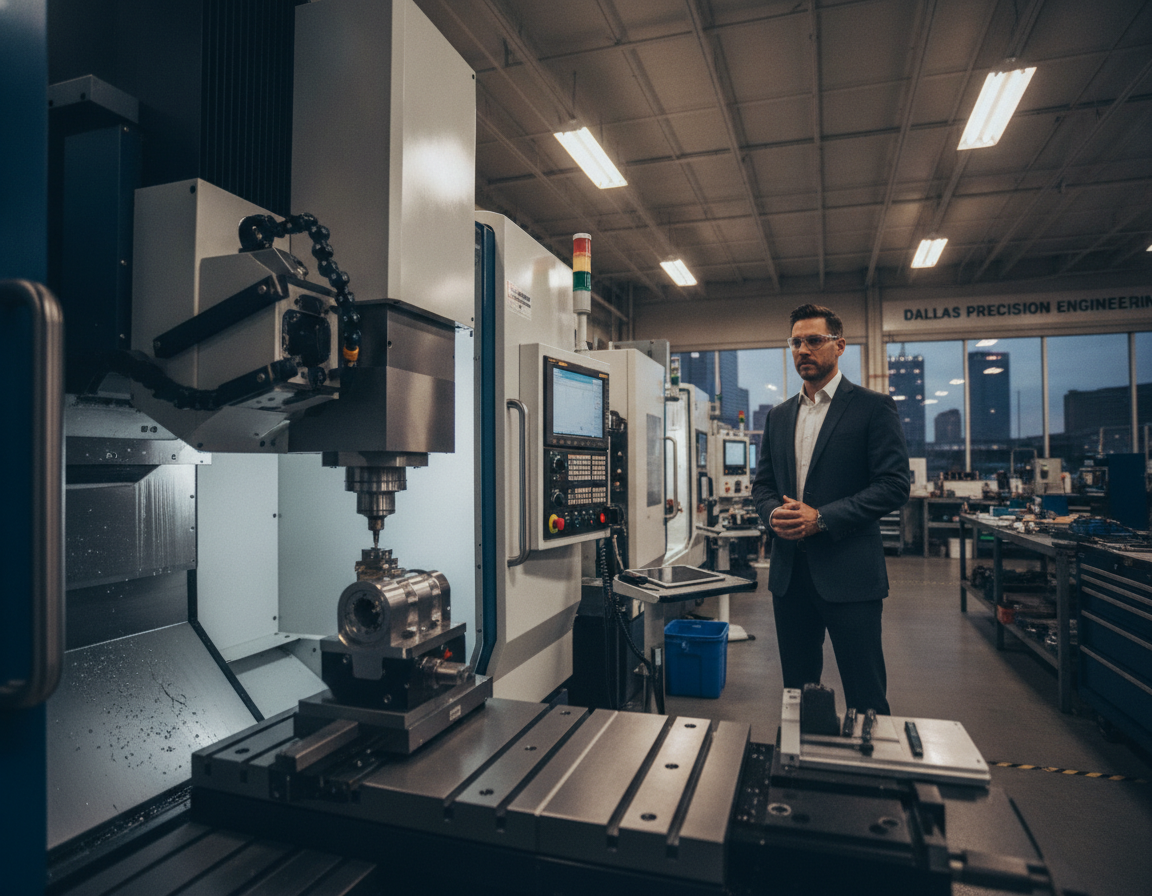
Precision machining provides the accuracy, repeatability, and dimensional control required throughout aerospace, medical, and industrial manufacturing. Through CNC lathe machining in Dallas, suppliers can achieve close dimensional limits, uniform finishes, and reliable production output. This controlled manufacturing approach substantially reduces corrective work, rejected components, and avoidable machine downtime. Advanced shops use a combination of multi-axis mills, precision lathes, EDM machines, waterjets, and laser-cutting equipment. This combination enables intricate components to move through production with fewer setups, less repositioning, and reduced supplier handoffs. The result is improved cycle performance and stronger component quality for products such as engine parts, landing-gear components, and avionics housings.

Local visibility has become an important part of building credibility and attracting work within the Dallas machining market. Machine shops use Instagram and other social-media channels to publish process photographs, equipment videos, completed-part examples, and case studies. The strategy generates customer interest and supports recruitment of experienced operators and technical personnel across the local CNC sector.

Practical monitoring examples, including the use of Datanomix by companies such as Paramount Machine, illustrate the value of Automated Production Intelligence. By linking to shop-floor machinery, the software captures genuine utilization, running time, idle periods, and production behavior. With clearer performance information, machining companies can quote more precisely, eliminate inefficiencies, and generate stronger financial returns.

This case study provides practical information concerning equipment selection, material processing, production improvements, and measurable business results. Attention is directed toward repeatable strategies that can be introduced by machining services in Dallas and throughout the broader regional manufacturing ecosystem.

CNC Lathe Machining In Dallas: Case Study Overview

The study reviews how CNC lathe machining in Dallas contributes to reliable, precision-focused manufacturing. It emphasizes the importance of controlled turning processes for industries requiring intricate shapes, close tolerances, and repeatable dimensions. The review considers machine selection, process controls, material-handling practices, tooling decisions, and the integration of production-monitoring technology. These combined practices improve estimating accuracy, machine utilization, and overall operating efficiency. Customer comments and visible project examples help validate performance while building confidence in the selected manufacturing partner.

Objectives And Scope Of This Machining Review

The primary objective is to show how consistent, controlled processes reduce waste and accelerate the production of critical components. The scope includes fixture and setup techniques, quality-verification procedures, and production-data collection for ongoing optimization. The study places particular emphasis on monitoring cycle duration, tool life, machine activity, and material traceability during prototype and production work.

Industries Supported In Dallas: Aerospace, Medical, Defense, Automotive, And Industrial

Aircraft engine hardware, landing-gear assemblies, and avionics enclosures often depend on extremely precise machining measured at the micron level. Defense applications demand durable designs, controlled materials, traceable production records, and repeatable quality. Medical manufacturing demands biocompatibility, dimensional precision, and finishes suitable for demanding clinical applications. Vehicle and industrial markets commonly focus on higher-volume manufacturing, process reliability, and cost efficiency.

Custom Mold Services DallasCustom Mold Services Dallas

Machining Partner Profile: Lowrance Machine And Local CNC Shop Capabilities

Through CNC milling, precision turning, and Datanomix monitoring, Lowrance Machine supports Dallas customers with improved manufacturing visibility and equipment performance. Available local capabilities include multi-axis machining, high-precision turning, advanced tooling systems, and flexible workflows for prototypes and extended production programs.

Capability Benefit Relevance
Multi-axis CNC milling Reduced repositioning with improved handling of intricate shapes Suitable for aerospace housings and medical implants
High-precision lathes Reliable concentricity and smooth finishes across repeated production Critical for engine parts, rotating shafts, and cylindrical components
Custom thread and fastener tooling Reliable manufacturing of nonstandard fastener forms and threaded features Useful for Dallas custom-fastener production and unique joining applications
Production monitoring Immediate visibility into running time, idle periods, and cycle trends Improves quotation accuracy for a CNC machine shop Dallas provider
Quality inspection stations Early error detection through sensors, vision equipment, and CMM inspection Supports regulated components requiring documented dimensional accuracy
Scalable component-manufacturing workflows Adaptable production from individual prototypes to repeat volume Supports scalable Dallas custom-fastener and specialty-part production

Machining Technology And Production Resources In Dallas

Dallas machine shops use advanced mills, turning centers, inspection equipment, and skilled bench work to satisfy demanding aerospace and industrial requirements. They balance automated high-accuracy equipment with practical manual skill when managing prototypes, repairs, and recurring production batches. Live production intelligence enables planners to align machines with current demand and minimize unnecessary downtime.

Advantages Of Multi-Axis And 5-Axis Machining In Dallas

Advanced multi-axis machines move tools and workpieces across several directions simultaneously, reducing setups for intricate aircraft parts. Machining multiple faces without removing the workpiece improves alignment, limits fixtures, and supports consistent finishing. Dallas 5-axis providers can eliminate many manual steps while improving positional accuracy across complex profiles.

Dallas CNC Lathe Machining: Turning Centers, Tooling, And Tolerances

Premium turning centers and live-tool lathes support accurate machining of difficult alloys such as titanium and stainless steel. Tooling arrangements may include precision collets, hydraulic chucks, and replaceable indexable inserts configured for long runs and repeatable output. Successful CNC lathe machining in Dallas depends on thermal compensation, rigid machine construction, controlled workholding, and proactive tool-wear management.

Integrating CNC Milling And Manual Machining In Dallas

Dallas CNC mills create intricate cavities, precise contours, and closely spaced features with speed and repeatability. Skilled manual machining is still essential for unique tooling, fit modifications, and specialized one-time operations. Combining both workflows enables parts to progress smoothly from prototype development into controlled production while preserving accuracy and traceability. Integrating automated milling and manual expertise helps industrial machine shops complete custom or small-batch work more quickly.

Improving Machining Processes And Production Performance

Transformation within precision manufacturing generally comes from a series of controlled refinements across tools, programs, and operating practices. These refinements include optimizing tool setups, selecting suitable coolant formulations, improving fixture methods, and revising multi-axis programs. Each improvement aims to reduce cycle duration while preserving dimensional accuracy and dependable finishes. As cycle performance improves, Dallas machine shops can complete more work while maintaining the standards required for complex jobs.

Shorter machining cycles require fewer workholding changes and better optimized cutting movements. Dallas 5-axis teams apply adaptive feeds, controlled chip removal, and carefully sequenced operations to improve production. Such improvements minimize time spent away from actual material removal. Utilization systems track running time and inactivity so managers can balance capacity and reassign work to available machines.

Automated production intelligence provides immediate visibility into actual shop-floor performance. Dashboards display actual running rates, machine stops, downtime explanations, job histories, and utilization trends. This information supports competitive quotations, more accurate costing, and the identification of bottlenecks that reduce margins for machining services in Dallas.

Leaders can use monitoring information to uncover patterns of downtime linked to tool condition, coolant changes, and workflow delays. Shops may introduce preventive tool swaps, more effective coolant strategies, and updated process controls to protect part quality. The same data informs decisions about outsourcing work or keeping it inside a local CNC machine shop in Dallas.

Modern quality-control workflows increasingly include inline sensors designed to prevent errors before they create scrap. Integrated cameras verify that parts are loaded correctly and that key features exist during setup and ongoing runs. Laser profilers measure important diameters, edges, and contours before components move into secondary operations. CMM inspection verifies final tolerances on sampled components and finished production groups.

Multiple levels of quality verification reduce rejected components and rework while supporting compliance with aviation and healthcare specifications. Reliable workflows limit unplanned production failures and support organized Dallas industrial-machine repair when hardware faults occur.

Production information allows technicians to plan preventive servicing before small issues develop into major downtime. Trending alarms can reveal spindle imbalance, vibration changes, coolant contamination, or declining cutting performance. Early warnings allow Dallas industrial-equipment repair specialists to intervene before complete failure or permit specific parts to be replaced. Combining monitoring and preventive service improves operational consistency and helps manufacturers meet promised completion dates.

Specialty Components, Materials, And Dimensional Requirements

Local machine shops manufacture components from a wide range of aerospace-grade and industrial materials. Typical projects use aluminum grades such as 6061 and 7075, aerospace titanium, stainless or alloy steel, and modern composites. Each stock type demands specific cutter geometry, machining speeds, fixture strategies, and cooling practices to control wear and temperature.

When cutting aluminum, shops favor polished and positive-rake tools capable of supporting fast material removal. For titanium work, manufacturers use lower chip loads, strong fixtures, and coated cutters designed to resist heat and wear. To protect composite laminates, shops employ specialized drills, extraction systems, and low-damage clamping methods. Such tailored methods support consistent surface quality and dependable repetition during Dallas CNC turning operations.

Producing engine parts, landing-gear components, and avionics housings to tight tolerances requires controlled temperatures, stable fixtures, and disciplined setup procedures. Precision turning centers equipped with thermal compensation can provide micron-level repeatability when combined with in-process probing and routine calibration. Quality protocols use CMM measurement, laser inspection, calibrated gauges, and SPC analysis to detect dimensional drift.

Purpose-built fixtures reduce operator-related variation while making repeated production more stable. By connecting inspection findings to machining operations, shops can stop process drift before it creates extensive waste. The approach limits corrective machining and helps suppliers deliver important aerospace components on time.

Dallas suppliers frequently manufacture specialty components such as custom fasteners, cast inserts, threaded sleeves, and mold inserts. A custom fastener manufacturer Dallas operation may combine turning, heading, thread production, heat treatment, coating, and final inspection. Such manufacturing controls allow fasteners to meet demanding aerospace expectations for durability and documented conformity. Cast inserts are machined to controlled shoulder depths, diameters, and thread fits so they function reliably inside composite or aluminum housings.

Successful mold inserts depend on smooth surfaces, consistent dimensions, and highly accurate form. Dallas manufacturers use CNC turning for cylindrical features and milling or EDM for intricate cavities and complex profiles. Accurate production histories and machine-activity data support profitable pricing without unnecessarily extending schedules.

Component Representative Stock Primary Manufacturing Steps Required Tolerance
Precision engine spindle Aerospace-grade Ti-6Al-4V CNC lathe machining, thermal processing, finish grinding, and coordinate measurement ±0.005 mm
Precision landing-gear sleeve Aerospace 7075-T6 aluminum alloy CNC machining, bore finishing, protective anodizing, and fit verification Approximately ±0.02 mm
Avionics housing 6061-T6 aluminum CNC milling, secondary turning, edge finishing, and pressure verification A general tolerance of ±0.05 mm
Specialty threaded fastener Alloy steel Fastener forming, precision lathe work, thermal hardening, and protective finishing Approximately ±0.03 mm
Machined threaded insert Bronze alloy or stainless material Finish turning, thread milling, and press-fit inspection A dimensional allowance of ±0.04 mm
Hardened mold component Industrial H13 mold steel Electrical-discharge machining, precision CNC work, surface polishing, and coordinate measurement ±0.01 mm

When designers and shop-floor specialists work together, projects progress more quickly with fewer costly changes. Dallas suppliers with multiple capabilities show how complex components can move efficiently from prototype quantities into larger production runs. By balancing efficiency and accuracy, local machining services can meet demanding aerospace specifications while maintaining attractive costs and schedules.

Custom Mold And Insert Services Connected To CNC Lathe Machining

CNC turning forms an important foundation for mold-building and tooling work throughout the Dallas market. Precision lathe work and milling create the primary forms used for mold cavities, cores, rotational components, and tooling inserts. Accurate machining ensures mold components fit correctly and produce stable results throughout repeated molding cycles.

Custom Molds Dallas: Services, Capabilities, And Workflow

Dallas mold specialists apply computer-aided manufacturing and multi-axis equipment to handle intricate shapes. Technical teams create precise cutting programs, design specialized workholding, and perform high-speed finishing to meet required textures and finishes. EDM equipment creates narrow features, internal corners, deep details, and other forms that conventional cutters cannot reach effectively.

Tooling choices, fixture accuracy, process control, and ongoing inspection work together to preserve consistency. Dallas custom-mold suppliers use these methods to deliver repeatable cavities and properly aligned bores for high-output applications.

Producing Dallas Injection, Rubber, And Industrial Molds With CNC Machining

Dallas injection-mold projects depend on precise cavity forms, material-flow paths, gate locations, and sealing features. Precision lathe machining creates round mold components with controlled diameters, concentricity, and true-running surfaces. Dallas rubber-mold applications depend on controlled draft and polished surfaces that reduce excess material and cleanup.

Industrial molds Dallas programs often involve larger tools, substantial plates, and stronger wear-resistant alloys. CNC milling and turning create the primary features before finishing, grinding, polishing, or texturing establishes the final required condition.

Dallas Mold Builder Partnerships And Precision-Turned Inserts

Partnerships between mold designers and machine shops help transform theoretical geometry into reliable production tooling. Precision turning creates inserts, threaded cores, stepped bores, sleeves, and alignment features that correspond accurately with the surrounding cavity geometry.

Mold builders use recorded performance and machine-activity data to organize runs, predict expenses, and plan equipment care. Better planning reduces lead times while helping finished molded parts fit downstream assemblies correctly.

Tooling Element Typical Process Steps Verification Process
Injection-mold cavity block Three-axis roughing, five-axis finishing, and EDM detailing Coordinate measuring machine inspection and surface profilometry
Precision mold core pin or sleeve Precision turning followed by thermal processing and finish grinding Diameter, runout, surface, and hardness verification
Mold insert for overmolding Complex machining followed by detailed finishing and polish operations Visual examination and dimensional sampling
Template for a rubber mold Initial tooling build, CNC refinement, and specified texture treatment Tear-strength testing and dimensional verification
Large industrial mold plate Milling and slotting followed by stress reduction and final flatness finishing Surface-plate measurement for flatness and parallelism

Maintenance, Repair, And Operational Resilience

Reliable machinery is essential for machine shops seeking consistent output, dependable delivery, and long-term competitiveness. Routine thermal verification, spindle-health monitoring, bearing analysis, lubrication checks, and tool-life tracking help preserve equipment condition. Such practices protect finish consistency and close tolerances for aviation, healthcare, and similarly demanding work.

Local manufacturers combine internal maintenance expertise with qualified outside contractors to provide rapid technical response. Dallas industrial-equipment repair providers troubleshoot hydraulic systems, servo drives, electronics, controls, and mechanical failures. Coordinating replacement parts, service personnel, production priorities, and access schedules significantly reduces mean time to repair.

A formal preventive-service program changes maintenance from emergency response into planned equipment care. Effective maintenance systems document mechanical checks, vibration trends, fluid condition, lubrication, warning events, and prior repairs. Consistent records prevent avoidable interruptions and demonstrate controlled maintenance to customers and auditors.

Machine-monitoring systems detect deterioration before a small issue develops into extended downtime. Automated alerts expose declining cycle performance, tool degradation, and abnormal operating behavior. Industrial machining services Dallas providers using these systems recover more quickly from incidents and spend less time gathering production information manually.

Case studies show that relatively small corrections can restore production capacity surprisingly quickly. A line may recover during one work shift after technicians change worn bearings, revise offsets, tune cutting parameters, or correct coolant problems. Local industrial machine repair Dallas companies often maintain or source critical spare parts to accelerate the recovery process.

Resilient manufacturing depends on capable employees, clear procedures, and ready access to replacement components. Cross-trained technicians, documented maintenance instructions, and prioritized spare lists reduce the risk and duration of downtime. Operational preparedness helps manufacturers maintain delivery commitments and protect long-term customer trust.

Business Impact And Measured Outcomes From The Case Study

The case study records meaningful improvements in shop performance after targeted investment in workflow refinement and production-data analysis. Measures such as cycle time, scrap percentage, first-pass yield, utilization, and on-time delivery demonstrate the relationship between process optimization and increased throughput in machining services Dallas operations.

Key Results In Cycle Time, Scrap, Yield, And On-Time Delivery

Cycle duration decreased after teams adopted multi-axis methods, optimized cutters, and removed avoidable follow-up processes. Stronger fixture control and machine-vision inspection also produced a noticeable decline in scrap. As a result, more healthcare and aviation components passed inspection without requiring correction.

By studying historical production and present utilization, shops identified potential delays before schedules were affected. The improved predictability reassured purchasing personnel that essential parts would arrive when needed for maintenance or final assembly.

Data-Driven Pricing, Quoting Accuracy, And Profitability

Past production data allowed the shop to calculate costs more accurately and schedule equipment and personnel efficiently. Accurate Dallas machine-utilization data helped minimize inactivity while moving planned servicing into quieter production periods.

Basing prices on actual job performance enabled shops to recover the true cost of manufacturing. Evidence-based pricing allowed providers to remain attractive to buyers while protecting financial returns. Customers were more likely to return when the supplier combined reliable delivery with transparent, sustainable pricing.

Custom Fasteners, Precision Production, And Extended Supplier Agreements

Buyers of Dallas custom fasteners and machined casting inserts benefited from faster completion and improved part-to-part consistency. Dependable output helped suppliers secure repeat orders and establish more durable commercial relationships.

Precision components delivered according to schedule helped OEMs avoid disruptions to assembly, maintenance, and final-product completion. Improved quality, timing, and responsiveness demonstrated why reliable local machine shops are valuable supply-chain partners.

Final Case Study Conclusions

The findings show how Dallas CNC lathe machining supports demanding applications across aviation, healthcare, vehicle, and industrial markets. Multi-axis turning, modern tooling, stable workholding, and controlled tolerance processes enable suppliers to produce parts that satisfy strict specifications. The addition of CNC milling Dallas capabilities and skilled manual finishing allows components to be supplied in a condition ready for assembly or final use.

Automated production intelligence and real-time monitoring have improved quotation accuracy, machine utilization, and operational decision-making. Better equipment visibility lowers inactivity and disruption, which supports healthier margins and more dependable customer relationships. Data-focused Dallas machine shops can complete work faster, reject fewer parts, and uncover previously unused capacity.

The ability to machine advanced materials and provide Dallas custom molds or mold inserts expands the value offered to customers. Comprehensive maintenance and inspection programs remain essential for protecting output, accuracy, and delivery commitments. Together, these capabilities allow industrial machining services in Dallas to meet demanding specifications while growing through improved productivity, reliability, and customer confidence.

Related: The Materials Used in CNC Milling in Houston